
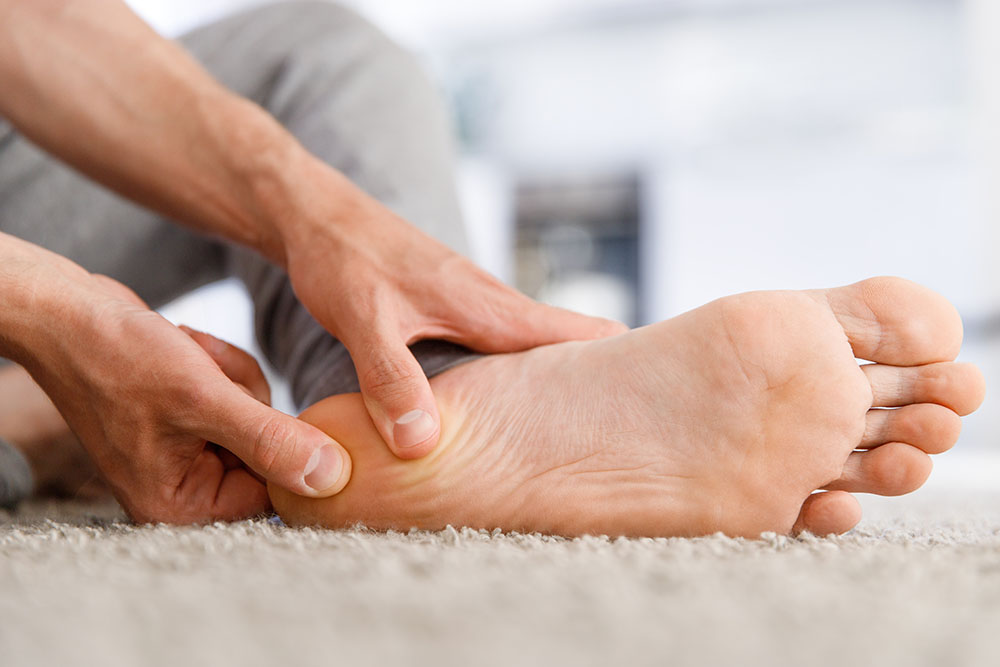
Plantar Fasciitis Treatment in Irving TX
Heel Pain, Foot Pain & Plantar Fasciitis — Treated at the Root Cause Without Surgery.
⭐⭐⭐⭐⭐ 456 Five-Star Reviews · 30 Years · 30,000+ Patients · Irving & Las Colinas TX
Plantar fasciitis is one of the most common and most painful foot conditions — and one of the most undertreated. The sharp, stabbing heel pain that strikes with your first steps in the morning, or after prolonged sitting, is not something you simply have to manage. It has an identifiable structural cause and it responds exceptionally well to the right treatment.
At Ethos Medical Group – Chiropractic & Longevity, Dr. Jason Black identifies the exact mechanical and soft tissue drivers of your plantar fasciitis and treats it with our advanced Ethos Stacked Care™ protocols — producing lasting relief that rest, stretching, and orthotics alone cannot achieve.
As Seen On:



What Is Plantar Fasciitis — And Why Won’t It Heal?
The plantar fascia is a thick band of connective tissue that runs from your heel bone (calcaneus) to the base of your toes, supporting the arch of the foot and absorbing the mechanical stress of walking, running, and standing. When this tissue is subjected to repetitive overload, poor biomechanics, or inadequate recovery, micro-tears develop in the fascia — producing inflammation, scar tissue formation, and the characteristic heel pain of plantar fasciitis.
The reason plantar fasciitis persists for so many patients — often for months or years — is that conventional treatment addresses only the symptoms. Rest reduces pain temporarily. Stretching provides mild relief. Orthotics alter load distribution. But none of these break down the scar tissue, restore proper fascial mobility, or correct the biomechanical contributors driving continued overload of the plantar fascia.
Dr. Black’s approach targets the scar tissue, the inflammation, the biomechanical contributors, and the neurological factors driving your plantar fasciitis — producing complete and lasting resolution in most cases.
Dr. Jason Black’s Approach to Plantar Fasciitis
Causes and Contributing Factors We Identify and Treat
- Plantar Fascia Scar Tissue and Fibrosis — accumulated micro-tear scar tissue that restricts fascial mobility and perpetuates the inflammatory cycle
- Calcaneal Enthesopathy — degeneration and calcification at the plantar fascia attachment on the heel bone, often associated with heel spur formation
- Heel Spurs — bony outgrowths at the calcaneal insertion of the plantar fascia — evaluated and managed conservatively in the majority of cases without surgery
- Excessive Pronation (Flat Feet) — overpronation increases tensile load on the medial plantar fascia with every step, driving chronic overuse injury
- Supination (High Arches) — rigid high-arched feet reduce shock absorption and concentrate stress at the plantar fascia insertion
- Tight Gastrocnemius and Soleus — calf muscle tightness reduces ankle dorsiflexion, dramatically increasing plantar fascia tension during the gait cycle
- Intrinsic Foot Muscle Weakness — weakness of the foot intrinsics reduces dynamic arch support, increasing passive plantar fascia load
- Ankle Joint Restriction — limited subtalar and talocrural mobility altering foot biomechanics and increasing fascial stress
- Lumbar and Sacral Nerve Involvement — S1 nerve root compression can contribute to heel and plantar foot pain that mimics or complicates plantar fasciitis
- Occupational Overload — prolonged standing on hard surfaces, sudden increases in training load, or inappropriate footwear
- Baxter’s Nerve Entrapment — entrapment of the first branch of the lateral plantar nerve mimicking plantar fasciitis — correctly identified with thorough neurological examination
Identifying which of these contributors is driving your plantar fasciitis is the essential first step. Generic treatment produces generic results.
How We Evaluate Plantar Fasciitis at Ethos
Dr. Jason Black personally conducts every plantar fasciitis evaluation. Our examination is designed to identify every structural, neurological, and biomechanical contributor to your heel and foot pain.
Your evaluation includes:
- Detailed History: Duration, onset pattern, location of pain, aggravating activities, footwear, occupational demands, training history, and prior treatments.
- Plantar Fascia Assessment: Palpation of the fascial insertion, midsubstance, and distal fibers — identifying the exact location and severity of involvement.
- Ankle and Foot Orthopedic Testing: Windlass mechanism test, dorsiflexion assessment, subtalar mobility, and arch assessment.
- Neurological Testing: Evaluation of S1 nerve root function and Baxter’s nerve entrapment to differentiate fascial from neurological heel pain.
- Gait and Biomechanical Analysis: Assessment of pronation pattern, arch dynamics, tibial rotation, and knee and hip mechanics contributing to plantar fascia overload.
- Lumbar Spine Assessment: Evaluation of lumbar nerve root involvement — particularly S1 — that may be contributing to or complicating your foot pain.
- Digital X-Rays (when indicated): On-site imaging to assess heel spur formation and calcaneal pathology — available for $95 when clinically necessary.
Following your evaluation, Dr. Black will explain exactly what is driving your plantar fasciitis and what a realistic, complete resolution looks like for your specific case.
How Ethos Treats Plantar Fasciitis
Our Ethos Stacked Care™ model combines the most effective plantar fasciitis treatments available — targeting the scar tissue, inflammation, nerve involvement, and biomechanical contributors simultaneously:
- PiezoWave Sound Wave Therapy — our most powerful tool for plantar fasciitis. Acoustic wave energy breaks down scar tissue and calcifications in the plantar fascia insertion, stimulates collagen remodeling, disrupts the chronic inflammatory cycle, and produces lasting structural change in the fascia. Clinically proven for plantar fasciitis with outstanding outcomes — often producing significant improvement in patients who have failed months of conventional treatment
- Class IV Medical Laser Therapy — FDA-cleared photobiomodulation delivered directly to the plantar fascia insertion and heel. Reduces fascial inflammation, accelerates tissue repair, stimulates fibroblast activity for collagen synthesis, and relieves heel pain. Works synergistically with PiezoWave to produce faster and more complete resolution
- Active Release Technique (ART) — precisely targets and releases adhesions and scar tissue within the plantar fascia, intrinsic foot muscles, plantar intrinsics, and the gastrocnemius-soleus complex. Restores fascial mobility that stretching alone cannot achieve
- Chiropractic Joint Manipulation — adjustments to the subtalar joint, talocrural joint, midfoot joints, and lumbar spine restore proper foot mechanics, reduce joint restriction contributing to altered gait, and address any lumbar nerve root involvement
- Corrective Exercise and Gait Rehabilitation — intrinsic foot muscle strengthening, calf flexibility programs, single-leg stability training, and gait retraining to correct the biomechanical contributors driving plantar fascia overload
- Medical-Grade Nutritional Support — anti-inflammatory and collagen synthesis supplementation to support fascial healing and reduce systemic inflammation contributing to slow tissue recovery
What to Expect from Plantar Fasciitis Treatment at Ethos
What Our Plantar Fasciitis Patients Experience
- Identification of the exact mechanical and tissue contributors to their heel pain
- Progressive reduction in morning heel pain — often within the first 2-4 visits
- Reduced pain with prolonged standing, walking, and activity
- Restoration of normal foot mechanics and gait
- Complete resolution of plantar fasciitis in most cases — not just pain management
- Avoidance of cortisone injections, PRP injections, and surgery
- Return to running, sport, and full activity without heel pain
Is Ethos Right for Your Plantar Fasciitis?
We treat plantar fasciitis across the full spectrum — from recent onset to chronic, treatment-resistant cases lasting months or years. You may be a strong candidate if:
- You have sharp heel pain with your first steps in the morning
- Your heel pain returns after periods of sitting or rest
- Your plantar fasciitis has lasted more than 6 weeks without resolving
- Stretching, rest, and orthotics have not produced lasting relief
- You have been recommended for cortisone injection or surgery
- You are a runner, athlete, or someone who stands for extended periods at work
- Your heel pain is affecting your ability to exercise, work, or enjoy daily activities
The best first step is a complimentary consultation with Dr. Black. Most of our plantar fasciitis patients experience significant improvement within the first several visits — many achieve complete resolution.
Real Patients. Real Results. Hear What They Have to Say.
Heel Pain Keeping You Off Your Feet? Get Evaluated Today.
Book a complimentary consultation with Dr. Jason Black — 30 years · 30,000+ patients · Irving TX.
Most of our plantar fasciitis patients achieve complete resolution. Find out if you can too.
Request an Appointment (972) 409-0016
📍 300 E Royal Ln #110, Irving TX 75039 | Monday–Thursday 7:30am–6:00pm


