
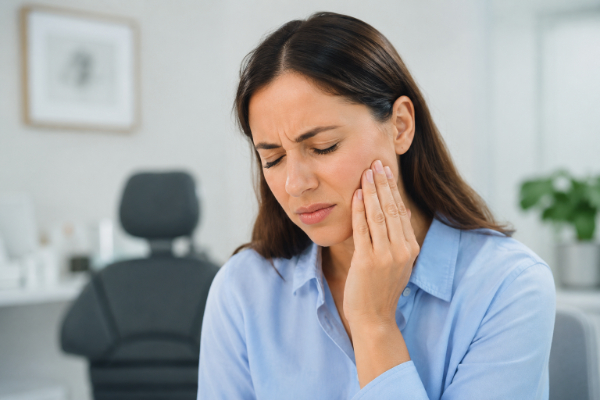
TMJ & Jaw Pain Treatment in Irving TX
Jaw Pain, Clicking, Grinding & TMJD — Treated at the Structural Root Cause.
⭐⭐⭐⭐⭐ 456 Five-Star Reviews · 30 Years · 30,000+ Patients · Irving & Las Colinas TX
TMJ dysfunction is one of the most underdiagnosed and undertreated conditions in healthcare. Patients are given night guards, told to avoid hard foods, or referred for dental procedures — while the structural and neurological contributors to their jaw dysfunction go unaddressed.
At Ethos Medical Group, Longevity and Wellness, Dr. Jason Black specializes in the evaluation and treatment of TMJ dysfunction, jaw pain, facial pain, and related conditions — identifying the cervical, muscular, and joint contributors driving your symptoms and treating them with precision.
As Seen On:



The Cervical Connection — Why TMJ Is Often a Neck Problem
The temporomandibular joint — where your jaw meets your skull just in front of your ear — does not function in isolation. It is biomechanically and neurologically connected to the cervical spine, the cranial base, the hyoid bone, and the entire fascial network of the head and neck.
The trigeminal nerve — which innervates the jaw, teeth, and face — shares neurological pathways with the upper cervical spine. Misalignment at C1 and C2, forward head posture, and suboccipital muscle tension all create neurological interference that directly contributes to jaw dysfunction, facial pain, and TMJ symptoms.
This is why so many patients with TMJ dysfunction also have neck pain, headaches, and upper back tension — and why treating only the jaw without addressing the cervical spine produces incomplete results. Dr. Black evaluates and treats both simultaneously.
Dr. Jason Black’s Approach to TMJ
TMJ and Facial Pain Conditions We Treat
- Temporomandibular Joint Dysfunction (TMJD) — clicking, popping, locking, and pain in the jaw joint from disc displacement, capsular inflammation, or articular degeneration
- Myofascial TMJ Pain — jaw pain and dysfunction driven by trigger points and spasm in the masseter, temporalis, pterygoids, and digastric muscles
- Jaw Clicking and Popping — anterior disc displacement with or without reduction causing audible and palpable joint noise
- Jaw Locking — closed or open lock from disc displacement or capsular adhesion limiting jaw opening
- Bruxism-Related TMJ — jaw joint and muscular damage from chronic teeth grinding and clenching, often driven by cervical spine dysfunction and stress
- Cervicogenic TMJ — jaw dysfunction and facial pain driven primarily by upper cervical misalignment and suboccipital muscle tension
- Facial Pain — chronic facial pain from myofascial, neurological, and structural contributors
- Trigeminal Neuralgia — evaluated for cervical and structural contributors to trigeminal nerve irritation — managed in conjunction with neurology where appropriate
- Bell’s Palsy — evaluated for cervical and inflammatory contributors to facial nerve dysfunction
- Ear Pain and Tinnitus Associated with TMJ — auriculotemporal nerve and Eustachian tube involvement in TMJ dysfunction producing ear pain, fullness, and tinnitus
- Post-Traumatic TMJ — jaw dysfunction following whiplash, facial trauma, dental procedures, or prolonged mouth opening
- Headaches of TMJ Origin — temporal and masseter-driven headaches from myofascial TMJ contributors
How We Evaluate TMJ at Ethos
Dr. Jason Black personally conducts every TMJ evaluation. Our examination is designed to identify every structural, neurological, and muscular contributor to your jaw dysfunction and facial pain.
Your evaluation includes:
- Detailed TMJ History: Onset, mechanism, jaw noise pattern, locking episodes, pain location, dental history, headache pattern, neck pain, and prior treatments.
- TMJ Joint Examination: Palpation of the joint capsule, assessment of jaw opening range and deviation pattern, joint noise evaluation, and occlusal assessment.
- Masticatory Muscle Assessment: Palpation of the masseter, temporalis, medial and lateral pterygoids, digastric, and hyoid musculature for tenderness, spasm, and trigger points.
- Cervical Spine Examination: Upper cervical assessment including C1-C2 alignment, suboccipital muscle tension, and cranial base mechanics — the most commonly overlooked contributor to TMJ dysfunction.
- Neurological Assessment: Trigeminal and facial nerve evaluation, cranial nerve screening, and cervical nerve root testing.
- Postural Assessment: Forward head posture measurement and cranial-cervical alignment evaluation — forward head posture increases masticatory muscle tension and directly worsens TMJ dysfunction.
- Digital X-Rays (when indicated): On-site imaging to assess cervical alignment and structural contributors — available for $95 when clinically necessary.
- Thermography: Infrared scanning to document facial and cervical inflammatory patterns.
How Ethos Treats TMJ and Jaw Pain
Our Ethos Stacked Care™ model addresses the jaw joint, the masticatory musculature, and the cervical spine contributors simultaneously:
- Upper Cervical Chiropractic Adjustments — precise, low-force correction of C1-C2 misalignment and cranial base dysfunction. Often produces immediate reduction in TMJ symptoms when the cervical spine is the primary driver — this is frequently the most important intervention for chronic TMJ cases
- Class IV Medical Laser Therapy — delivered directly to the TMJ capsule and masticatory muscles. Reduces intra-articular inflammation, accelerates disc tissue healing, relieves nerve irritation, and produces measurable pain reduction. Highly effective for acute and chronic TMJ inflammation
- PiezoWave Sound Wave Therapy — breaks down myofascial adhesions and chronic trigger points in the masseter, temporalis, and pterygoid muscles. Highly effective for treatment-resistant myofascial TMJ pain and bruxism-related muscle tension that does not release with manual therapy alone
- Soft Tissue Therapy — MFR and ART — intraoral and extraoral myofascial release targeting the masticatory muscles, pterygoids, digastrics, and suboccipitals. Releases the deep muscular tension driving jaw dysfunction and restores fascial mobility in the craniocervical complex
- Corrective Exercise and Jaw Rehabilitation — mandibular stabilization exercises, cervical deep flexor training, and postural correction protocols targeting the forward head posture and cervical dysfunction driving TMJ symptoms
- Functional Nutrition and Anti-Inflammatory Support — medical-grade anti-inflammatory protocols targeting systemic inflammation contributing to joint and nerve irritation in TMJ dysfunction
What to Expect from TMJ Treatment at Ethos
What Our TMJ Patients Experience
- Identification of the specific structural and muscular drivers of their jaw dysfunction
- Reduction in jaw pain and facial pain — often within the first 2-4 visits
- Decreased frequency and intensity of jaw clicking and popping
- Improved jaw opening range and symmetry
- Reduction in associated headaches and neck pain
- Reduced teeth grinding and jaw clenching as cervical tension resolves
- Long-term relief — not temporary symptom suppression
Is Ethos Right for Your TMJ?
We treat TMJ dysfunction across the full spectrum — from mild clicking to severe locking and chronic facial pain. You may be a strong candidate if:
- You have jaw pain, clicking, popping, or locking
- You grind or clench your teeth — especially at night
- You have facial pain, ear pain, or tinnitus associated with your jaw
- Your TMJ symptoms are accompanied by neck pain and headaches
- A night guard has not resolved your symptoms
- You have had prior dental or jaw treatment without lasting relief
- Your TMJ symptoms began or worsened after a car accident or facial trauma
The best first step is a complimentary consultation with Dr. Black. You will leave with a clear understanding of what is driving your jaw dysfunction and what can realistically be done about it.
Real Patients. Real Results. Hear What They Have to Say.
Jaw Pain Affecting Your Quality of Life? Get Evaluated Today.
Book a complimentary consultation with Dr. Jason Black — 30 years · 30,000+ patients · Irving TX.
We treat the jaw and the cervical spine together — the way TMJ was meant to be treated.
Request an Appointment (972) 409-0016
📍 300 E Royal Ln #110, Irving TX 75039 | Monday–Thursday 7:30am–6:00pm


